
8 Best 4 Season Truck Campers for Cozy Camping Year-Round
Do you love the idea of camping year-round, but think RVs can’t handle all weather conditions? If so, think again! A 4 season truck camper can keep you comfortable in winter, spring, summer, and fall.
Come along with us as we look at the best 4 season truck campers on the market and the key features that make them all-weather winners. Let’s get rolling.

What Is a 4 Season Truck Camper?
There isn’t an official industry standard defining what a 4 season camper is. Manufacturers can call just about anything a 4-season rig. However, certain features allow a truck camper to deliver on its year-round promise. You just have to know what to look for.
We can’t stress enough how important having good insulation is to a 4-season truck camper. This is essential for hot and cold weather. On hot days, good insulation will keep your RV cooler. Then, when cold weather strikes, you’ll stay toasty warm and won’t have to worry as much about your water lines and tanks freezing.
And while we’re talking about insulation, don’t forget to make sure any windows and skylights are thermally efficient. 4 season truck campers generally have double pane windows.

Pro Tip: If your camper doesn’t have double pane windows, there are still things you can do to keep drafts at bay. Learn how to insulate your RV windows here.
A true 4 season truck camper usually has air conditioning for the hotter months and a furnace for the colder months. Some will even have heated tanks, which keeps the tanks from freezing.
Benefits of a 4 Season Truck Camper
The major benefit of a 4 season truck camper is comfort. Your truck may take you where you want to go, but if your RV isn’t fit for the weather conditions, you might be miserable even though you found a glorious spot to camp.
An all-weather camper will keep you cool in the summer sun and cozy when the weather outside is frightful.
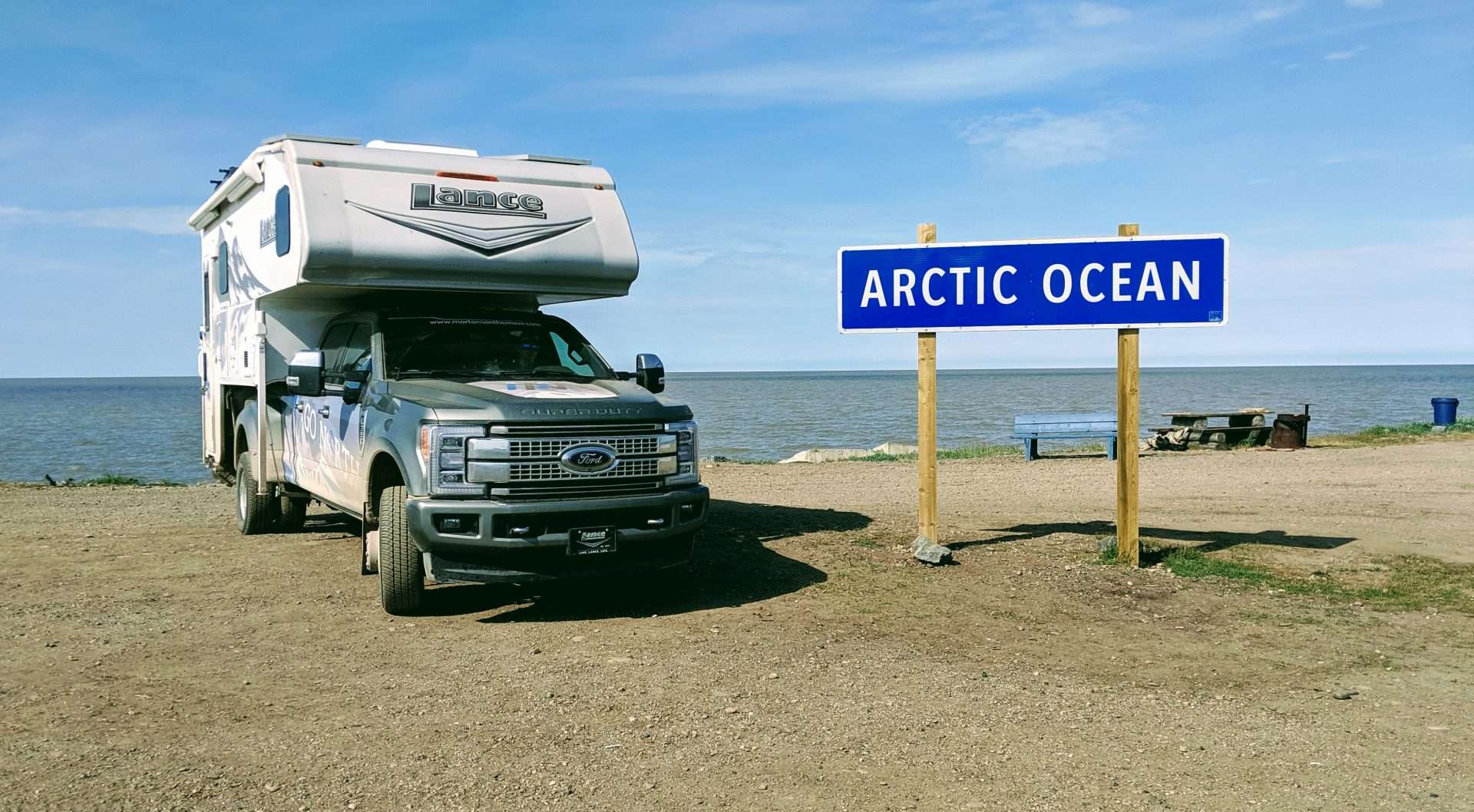
Pop-Up vs. Hard-Sided for 4 Season Truck Campers
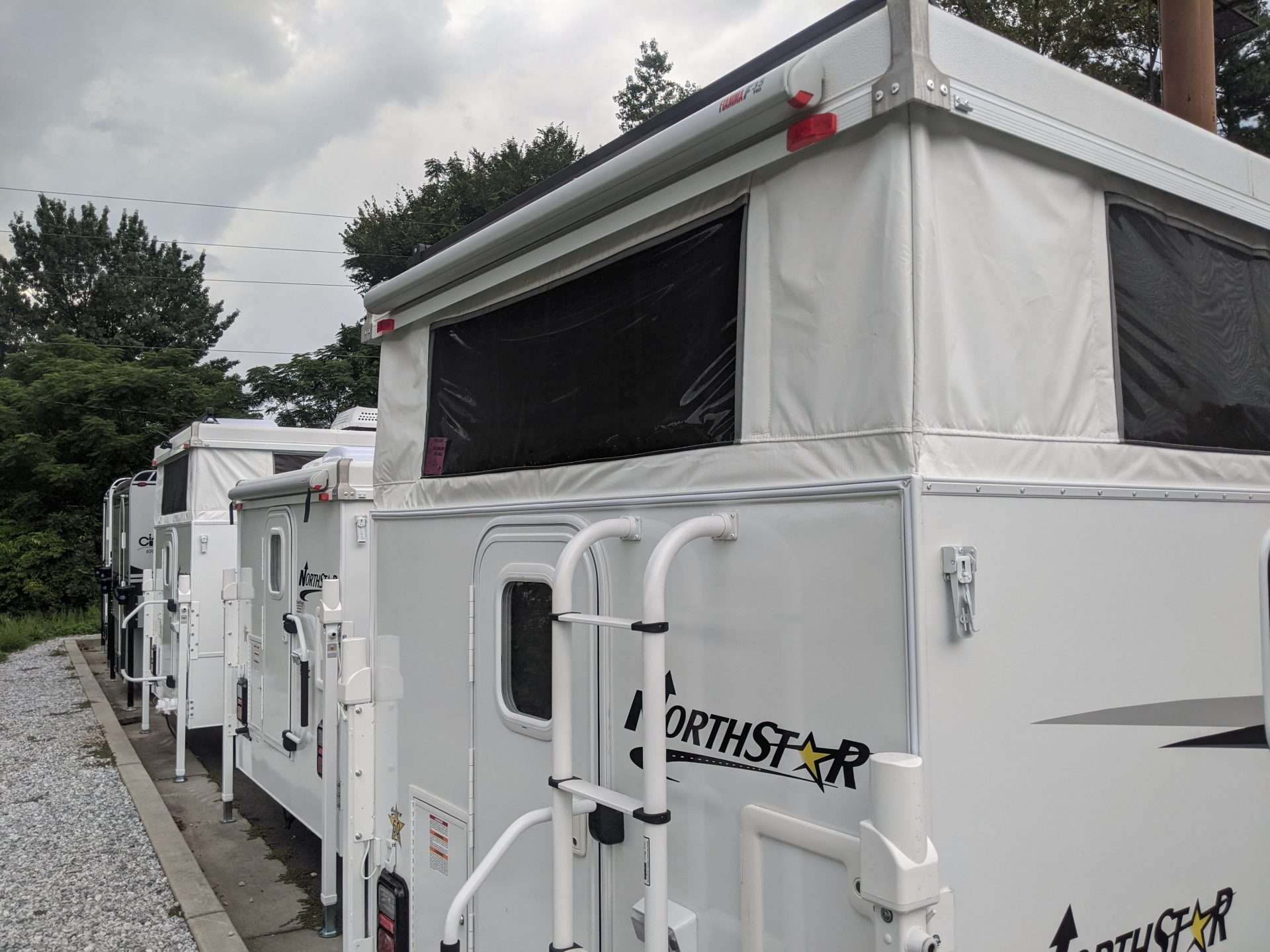
Four season truck campers are available in both pop-up and hard-sided versions. Pop-up truck campers collapse and rise to their full height when parked. Hard-sided campers have a solid permanent structure.
A pop-up camper usually weighs less and is much lower in height while driving. The low-profile design is more aerodynamic and can pass under some bridges and low-hanging branches that a hard-sided rig may not clear.
Pro Tip: Don’t get so caught up in how much your RV weighs that you forget to consider its height.
Hard shell campers can generally reach 10 to 12 feet in height. Some also come with slide-outs, which greatly increase the living space. Plus, you don’t have to deal with raising or lowering the roof every time you move.
Of course, four season hard-sided campers provide better insulation and protection from the elements than their pop-up counterparts. This is because pop-ups usually have canvas siding.

Things to Look for in a 4 Season Truck Camper
There are a few key things you should look for if you want a true 4 season truck camper that can handle the weather year-round. Here are six things to keep in mind.
Heating and Cooling System Suited for Camper Size
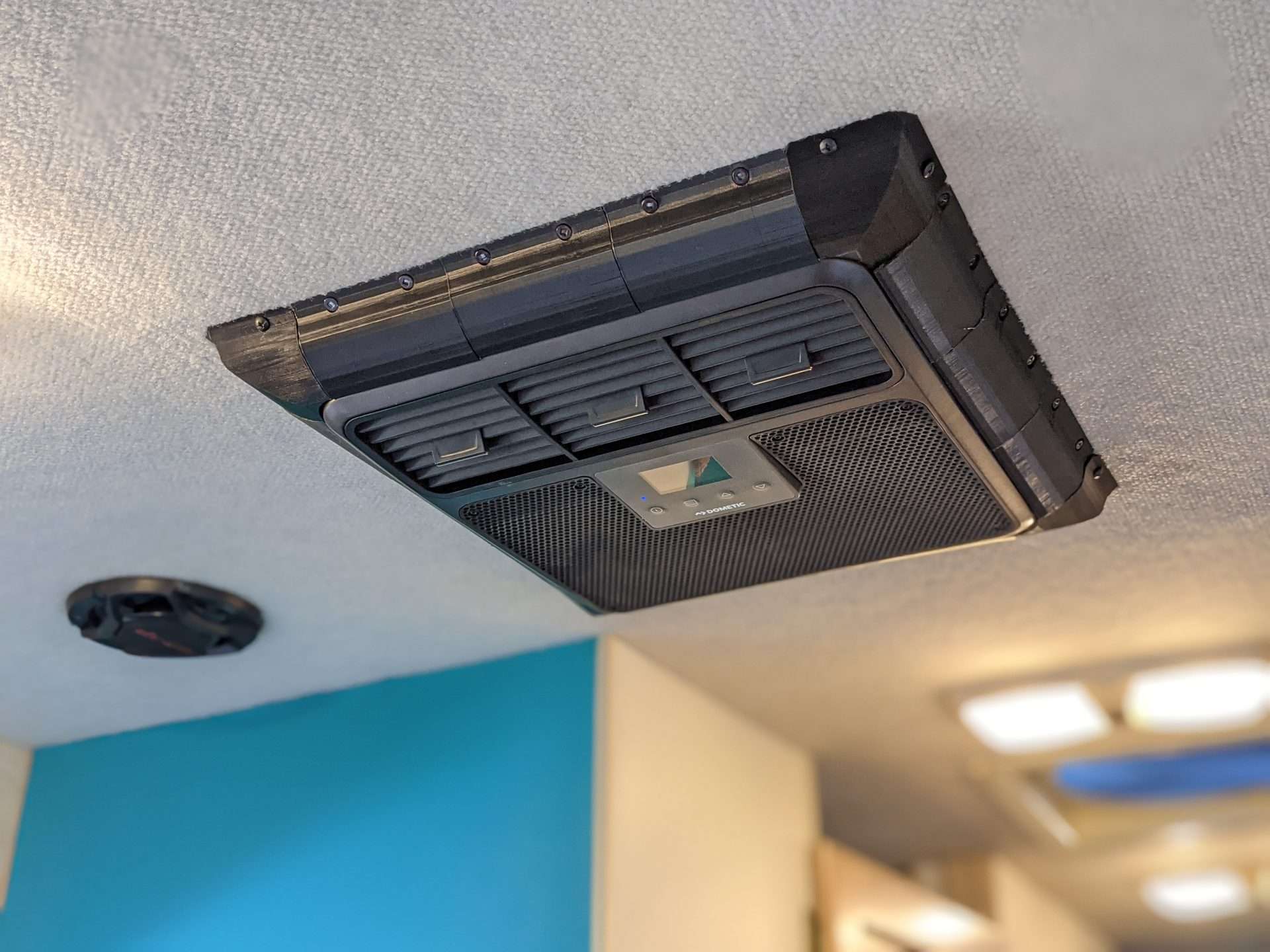
Be sure that the HVAC system, which handles heating and cooling, is sized appropriately for the square footage of the camper. The air conditioner should have enough power (BTUs) to easily keep the cabin cool when it gets hot outside. Conversely, the propane furnace needs to keep you warm when winter sets in. The larger the furnace or AC are the better they will perform in the small space.
Insulated and Heated Tanks
Insulated fresh and wastewater tanks are the bare minimum for any 4 season truck camper. If the tanks don’t have good insulation, they don’t stand a chance when the temperature dips below freezing.
Better yet are heated tanks. The best 4 season truck campers will have a way to keep the tanks warm so they won’t freeze. This could be forced air from the furnace or electric heating pads. Keep in mind that heating pads require quite a bit of power.
Propane Capacity
Most 4 season truck campers have dual propane tanks. Smaller campers may have two 20-lb units (typical size for a barbecue grill), while larger truck campers might have two 30-lb ones. The more propane you have, the longer you can use your stove, furnace, and water heater before needing to refill.

Insulation
Any good 4-season truck camper needs excellent insulation. Regardless of what a salesperson may say, ask about how the truck camper is insulated. Did they use high-grade insulation in the walls, ceiling, and floors? Address these areas for extreme weather conditions.
And don’t forget about windows. Make sure the camper has thermal or double-pane windows. That goes for skylights as well. You don’t want to lose precious heat as it rises to the ceiling of your RV.
Slide-outs
Slide-outs are a wonderful feature for expanding the living space of a camper. However, slides are not well-insulated, and their seams can allow cold air in and hot air out, making them less thermally efficient.
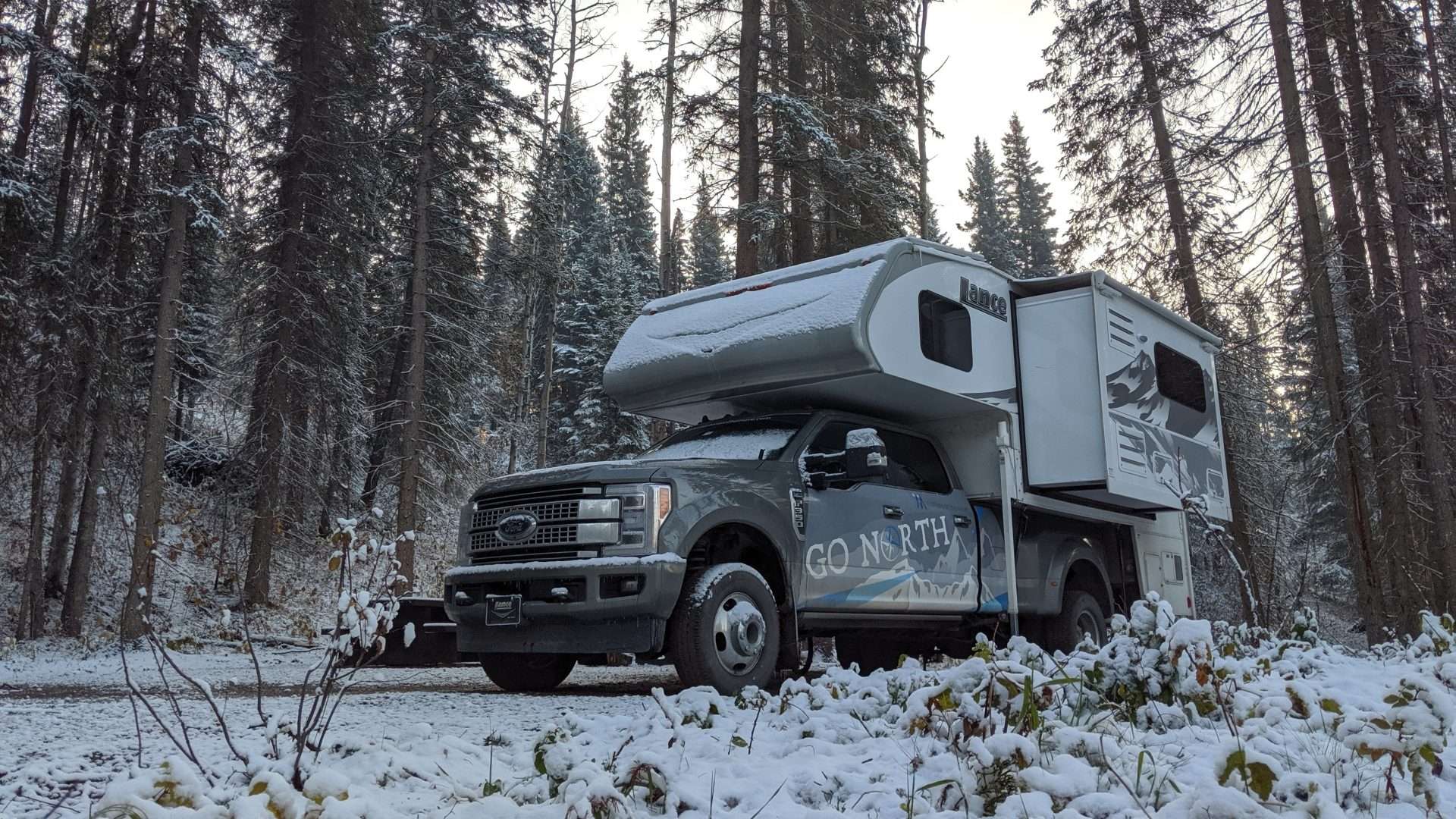
Newer 4 season truck campers have come a long way in improving insulation and seams. Though, a seamless hard-sided unit will be more efficient than one with slide-outs.
Standard Offering or 4 Season Option
Most manufacturers make a standard truck camper and offer a 4 season package as an upgrade. Additionally, you might find that some RVs touted as 4 season still don’t come with all the features you need. Be sure to consider this when pricing different models.
Lastly, if you mostly camp in summer or warmer climates, you may not need a truck camper with expensive cold-weather add-ons. Keep your camping style and needs in mind when RV shopping as a standard model might suit you just fine.